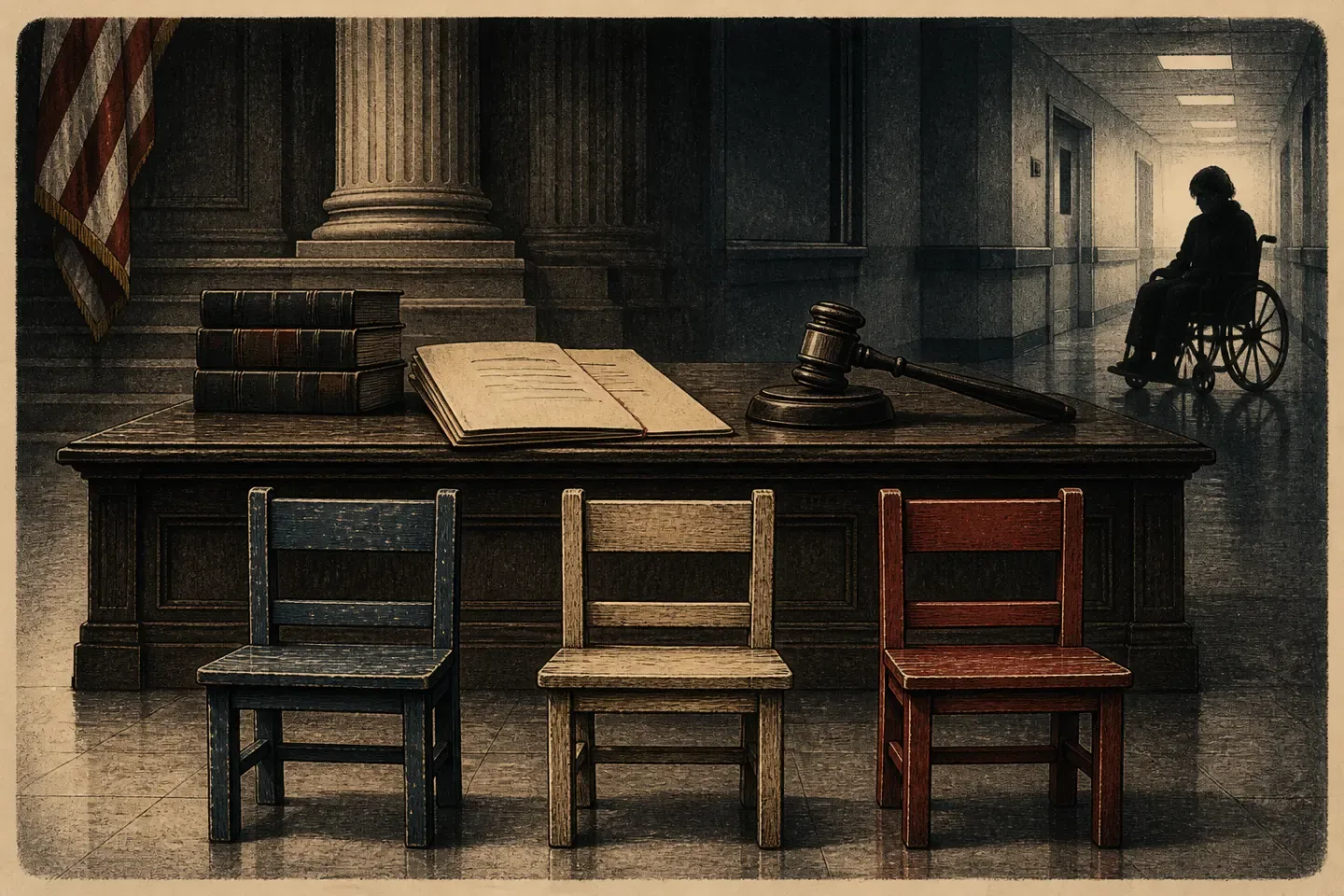
Medical negligence can be real and postpartum illness can be devastating. Neither should push Cora, Dawson and Callan out of the story while their mother seeks damages.
At the center of the Lindsay Clancy case are three children who will never grow up: Cora, 5; Dawson, 3; and Callan, 8 months.
That ought to be the first sentence in every discussion of this case. Too often, it is treated like an inconvenient detail standing in the way of a more fashionable story about a mother failed by medicine.
Clancy does not deny strangling her three children in their Duxbury, Massachusetts, home in January 2023. Her defense says she had lost touch with reality because of postpartum psychosis and therefore was not criminally responsible. Prosecutors say she understood what she was doing and made a conscious choice. As this commentary is published, a jury is still deciding that criminal question.
But Clancy is also pursuing a civil lawsuit against mental-health providers who treated her before the killings. Her complaint alleges that they failed to diagnose her properly, moved her through a succession of medications and missed signs of a psychiatric crisis. Those are serious allegations. They are also allegations, not established facts.
Providers who behave negligently should be held accountable. Postpartum psychosis is real, rare and dangerous. Families deserve competent care, and the medical system should not be placed beyond scrutiny simply because a case is horrifying.
None of that requires the public to accept a story in which Lindsay Clancy slowly becomes the principal victim of the night her children died.
Accountability Cannot Be Written Out of the Story
The lawsuit asks a civil court to examine whether medical professionals contributed to the catastrophe. That is a legitimate legal question. Yet the moral presentation surrounding the case too often performs a quiet substitution: the children become background scenery while every decision, diagnosis and prescription involving their mother is placed under a microscope.
Cora, Dawson and Callan did not choose a provider. They did not fill a prescription. They did not decide whether a hospital history was adequate or whether a diagnosis was correct. They were completely dependent on the adults around them, and they paid the final price.
There is a troubling instinct in public life to confuse an explanation with an erasure. Mental illness may explain behavior. Medical failures may contribute to a crisis. Neither automatically settles the question of responsibility, and neither gives the public permission to avert its eyes from the people who were killed.
Clancy's civil lawyers are entitled to make their case. The defendants are entitled to contest it. A court can decide whether anyone violated a professional duty and whether those failures legally caused harm. But the cultural verdict should not be predetermined by therapeutic language or by the desire to turn a terrible act into a cleaner story about a broken system.
Sometimes a system fails. Sometimes an individual commits an unforgivable act while profoundly ill. Sometimes both propositions may contain truth. What cannot be true is that the humanity of the children matters less because the adult who killed them also suffered.
Two Lawsuits, Two Very Different Centers
It is also important not to blur Clancy's own malpractice action with the separate wrongful-death lawsuit filed by Patrick Clancy, individually and on behalf of the children's estates. The two cases may involve overlapping allegations about medical care, but they do not occupy the same moral ground.
One asks whether Lindsay Clancy was harmed by her treatment. The other asks what is owed for the deaths of Cora, Dawson and Callan.
That distinction should remain visible. A legal system capable of considering negligence is also capable of remembering whose lives were taken. Sympathy need not be rationed, but attention should have an order. Three dead children come before the reputational rehabilitation of the adult who killed them.
If Clancy's providers were negligent, prove it. If their decisions violated the standard of care, establish it with records and testimony. If damages are legally justified, let a jury say so. Serious accountability requires evidence, not a public-relations narrative in which every thread leads away from the person whose hands ended three young lives.
The civil case may reveal genuine failures. It may even teach hospitals and families how to recognize danger earlier. That would be valuable. But no reform, diagnosis or damages award can be allowed to turn Cora, Dawson and Callan into footnotes.
Their names are not a complication in Lindsay Clancy's story.
They are the story.

Claire Whitmore is a conservative writer covering culture, family, education, media, and the rapidly changing expectations placed on women in modern America. Her work examines the intersection between politics and everyday life, particularly debates surrounding motherhood, relationships, career expectations, schools, and popular culture. Whitmore is skeptical of political movements that treat traditional choices as inherently outdated and argues that genuine freedom requires allowing women to define success for themselves. At The Dispatch Room, she brings a measured but unapologetically conservative perspective to some of the country’s most contentious cultural debates.
Discussion
Loading discussion…