His convention video was a political choice, not a party switch. The backlash raises a harder question about how much independence either party really tolerates.
John Fetterman gave Republicans something useful at their convention: a Democrat willing to say something favorable about a Republican. Nobody should pretend that was politically meaningless. But the idea that cooperation becomes disgraceful the moment the other party benefits deserves a little more scrutiny than it usually gets.
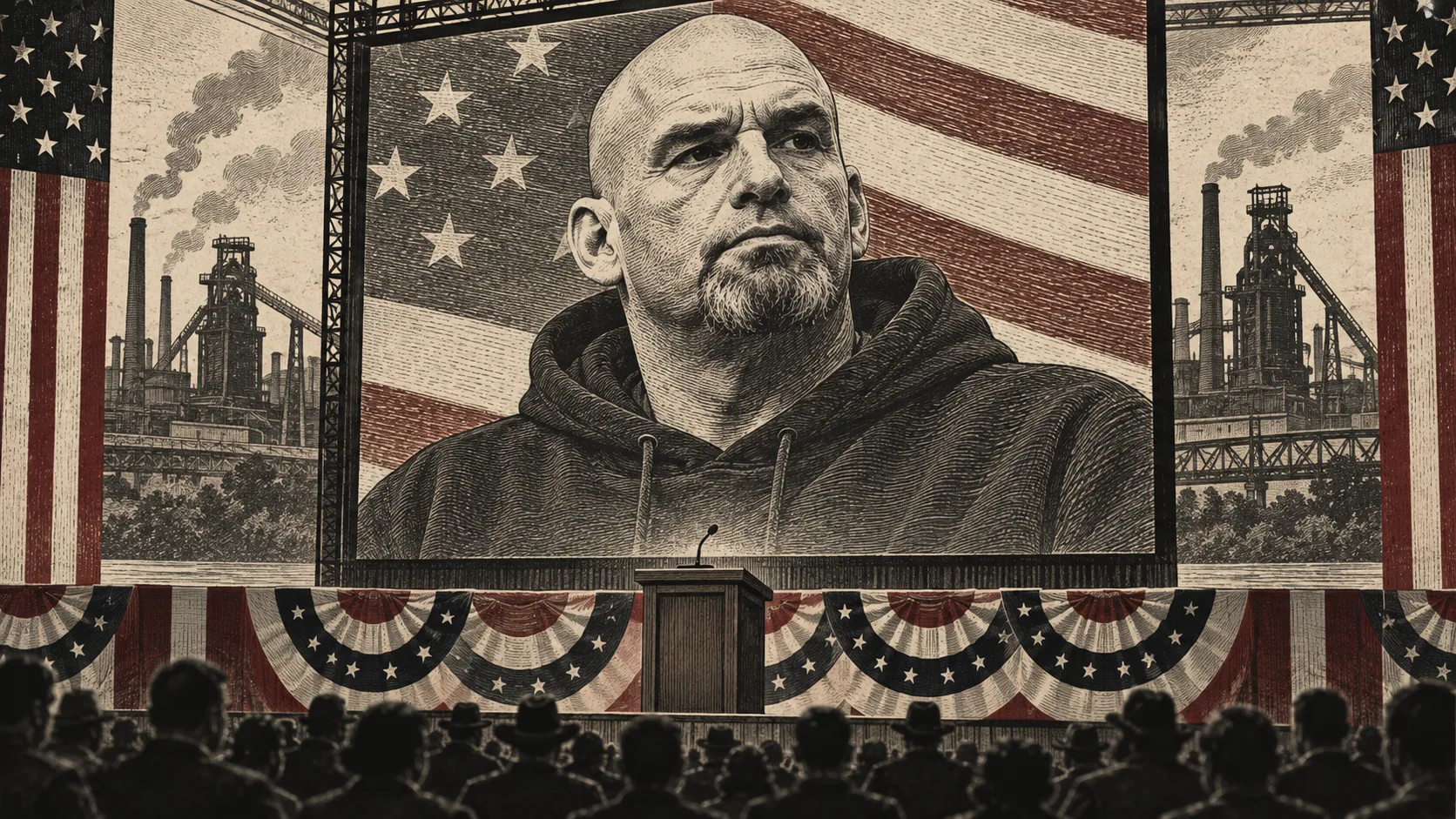
On September 9, the Pennsylvania senator appeared in a recorded video at the GOP's midterm convention in Dallas, introducing fellow Pennsylvania senator Dave McCormick. According to the Associated Press, he praised McCormick, rejected socialism and pledged cooperation with President Trump on steel.
He subsequently said he would not change parties and would support Democratic control if the Senate majority changed hands. That distinction matters: this was a crossover appearance, not an announcement that Republicans had gained a senator.
CBS Pittsburgh reported that DNC Vice Chair Malcolm Kenyatta compared Fetterman to Benedict Arnold.
A party convention is not a committee meeting
Democrats have a legitimate objection available. A campaign convention exists to help a party win, and lending it your image does more than signal that you can work with a colleague. Fetterman's appearance gave Republicans a useful contrast to present to voters. His critics do not have to applaud that choice.
What they should have to explain is where their standard begins and ends. Is the problem that the appearance helped Republicans, that his argument was wrong, or that a Democratic senator publicly rejected an ideological direction some on the left favor? Those are different complaints, and they deserve different answers.
From a conservative perspective, there is something refreshing about an elected official who will distinguish between an opponent and an enemy. Public service does not require pretending everyone in the other party is incapable of doing anything worthwhile.
It also does not require agreeing with every policy advanced by someone you are willing to praise. Political judgment should be more demanding than checking whether the person speaking has the approved letter beside his name.
Republicans should resist the easy fantasy
Conservatives should take Fetterman's stated intentions seriously rather than invent a conversion story. An agreeable moment does not erase the rest of a politician's record. Nor does it entitle a party to claim ownership of him.
The useful question is whether his position on a particular issue makes sense. If it does, welcome the cooperation. If it does not, challenge it. That standard is more durable than treating every crossover compliment as a recruitment announcement.
The same discipline applies to Republican dissenters. Anyone defending Fetterman's independence should be prepared to defend a Republican's right to reach an inconvenient conclusion too. Otherwise, the principle amounts to little more than enjoying the other side's discomfort.
Independence has to mean something
There is no obligation to call every act of political independence courageous. Some choices are poorly judged; some explanations are unconvincing. Voters are entitled to decide that an elected official no longer represents them.
But criticism works better when it addresses the decision instead of treating party loyalty as the entire job description. A senator represents constituents, including people who did not vote for him. Their interests do not neatly stop at the edge of a campaign platform.
Fetterman's video deserves debate precisely because the setting carried political consequences. The answer, however, should be an argument about those consequences—not an assumption that praising a colleague amounts to betrayal.
If bipartisanship is worth anything, it has to survive an instance that is inconvenient for your own party.
Reporting basis: Associated Press, September 10, on the video and Fetterman's response; CBS Pittsburgh, September 10, on Kenyatta's criticism. This article is commentary.

Daniel Mercer is a conservative political writer specializing in elections, government, foreign policy, and the growing power of America’s political and administrative institutions. His work focuses on how decisions made in Washington affect ordinary Americans far beyond the capital. Mercer is particularly interested in executive power, government bureaucracy, media influence, immigration, national security, and the evolution of the Republican Party. At The Dispatch Room, he approaches politics from a pragmatic conservative perspective, separating political theater from the decisions and institutions that actually shape public policy.
Discussion
Loading discussion…