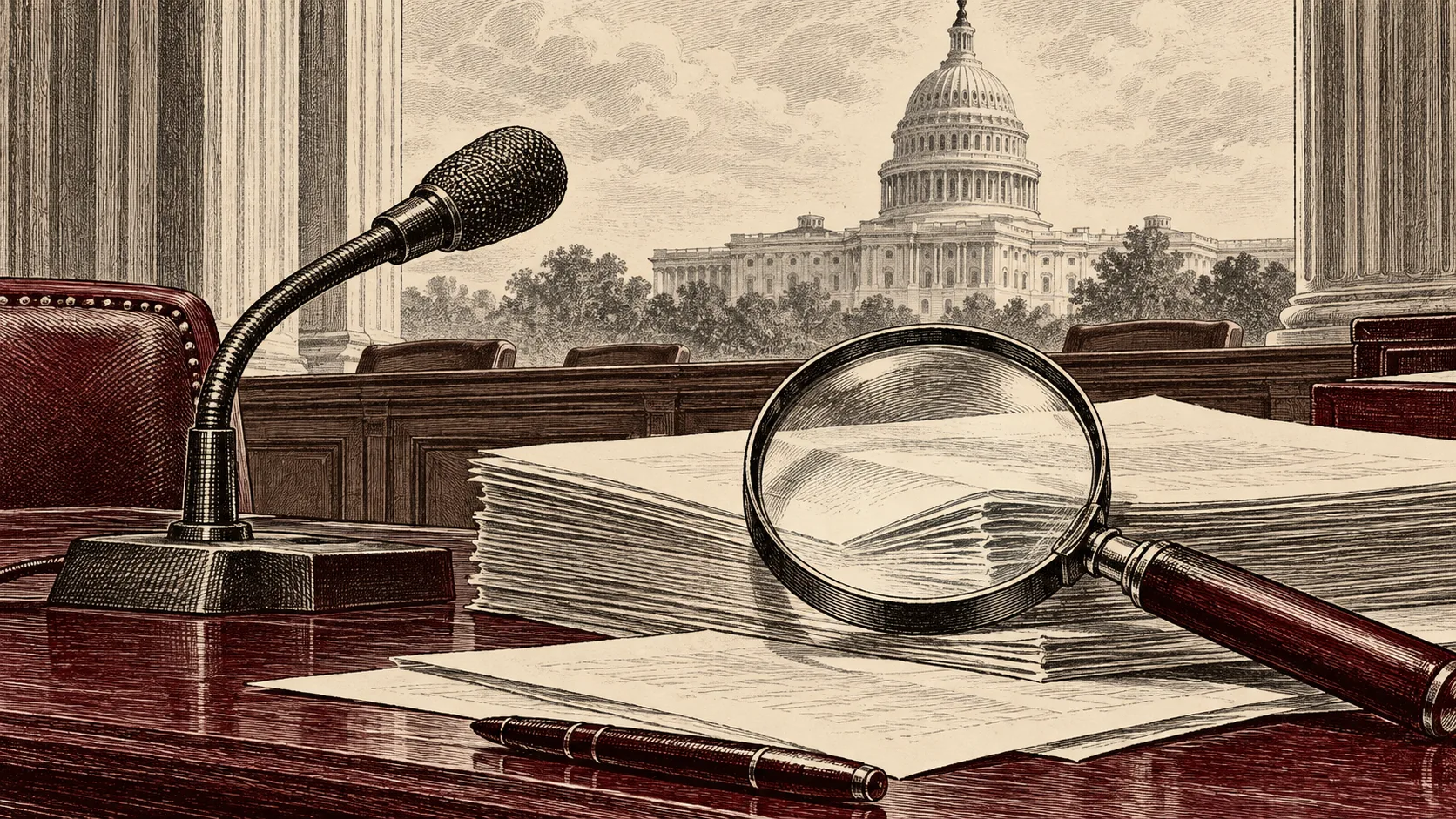
Congress should follow the financial evidence without treating unpopular opinions as proof of foreign control.
A political message can be sincerely believed and still deserve questions about who is paying to promote it. That should not be a controversial proposition in a country where activists routinely demand transparency from corporations, lobbyists and elected officials.
The same expectation should apply when the organization being scrutinized describes itself as a movement for peace or social justice.
At a September 15 House Foreign Affairs subcommittee hearing on covert foreign influence, Chairman Bill Huizenga argued that hostile governments can exploit American openness through concealed financing and amplification. His published opening remarks singled out businessman Neville Roy Singham and groups including CODEPINK and The People's Forum, alleging their activities advance adversaries' interests.
Those are the chairman's allegations and interpretation, not a court's findings. A hearing title does not establish that a named organization is controlled by a foreign government.
CODEPINK has publicly denied receiving funding from China or any other foreign government or agency. In its earlier published response to funding allegations, the group described its support as coming primarily from people who favor peace. That denial belongs in the discussion, not in a footnote nobody reads.
Follow the evidence, not the slogan
Congress has a legitimate reason to examine whether money, organizational relationships or undisclosed instructions connect political advocacy to foreign interests. The useful questions concern identifiable transactions and conduct: who provided funds, what conditions accompanied them and who decided how they would be spent.
An unpopular foreign-policy position is not an answer to those questions. Neither is a photograph of somebody visiting another country. Sympathy for a government, financial support from a private donor and direction by a foreign state are different claims requiring different evidence.
If lawmakers want Americans to take the investigation seriously, they should make those distinctions just as carefully as they make their accusations. Records that can withstand scrutiny will do more to expose improper influence than another round of dramatic labels.
Activist organizations, for their part, should not imagine that a morally appealing mission puts their institutional arrangements beyond examination. Demanding answers from powerful interests is a respectable political practice. It becomes less convincing when the people making the demand insist that questions about their own organizations are automatically illegitimate.
Transparency must work in both directions
There is a conservative case for this scrutiny that does not depend on granting Washington a new license to police opinions. A sovereign country has an interest in understanding organized attempts to manipulate its public debate. A free country also has an obligation to protect citizens who disagree with its foreign policy.
Both principles become easier to defend when the focus stays on provable conduct. Investigators should explain what the evidence establishes, what remains disputed and why a particular relationship matters. Organizations should have a meaningful chance to respond. Conclusions should not outrun the documents.
This standard also needs to survive a change of political target. Covert influence would not become acceptable because the message pleased Republicans, and an investigation would not become justified merely because its target annoyed them. Selective suspicion is a partisan habit, not a serious national-security policy.
The hearing raises questions worth pursuing. The next test is whether Congress produces clear evidence and proportionate conclusions rather than treating the accusation itself as the accomplishment.
Americans should be able to evaluate political arguments with a fair understanding of the interests behind them. Getting there requires financial scrutiny, respect for lawful dissent and the discipline to distinguish what officials suspect from what they can demonstrate.

Daniel Mercer is a conservative political writer specializing in elections, government, foreign policy, and the growing power of America’s political and administrative institutions. His work focuses on how decisions made in Washington affect ordinary Americans far beyond the capital. Mercer is particularly interested in executive power, government bureaucracy, media influence, immigration, national security, and the evolution of the Republican Party. At The Dispatch Room, he approaches politics from a pragmatic conservative perspective, separating political theater from the decisions and institutions that actually shape public policy.
Discussion
Loading discussion…