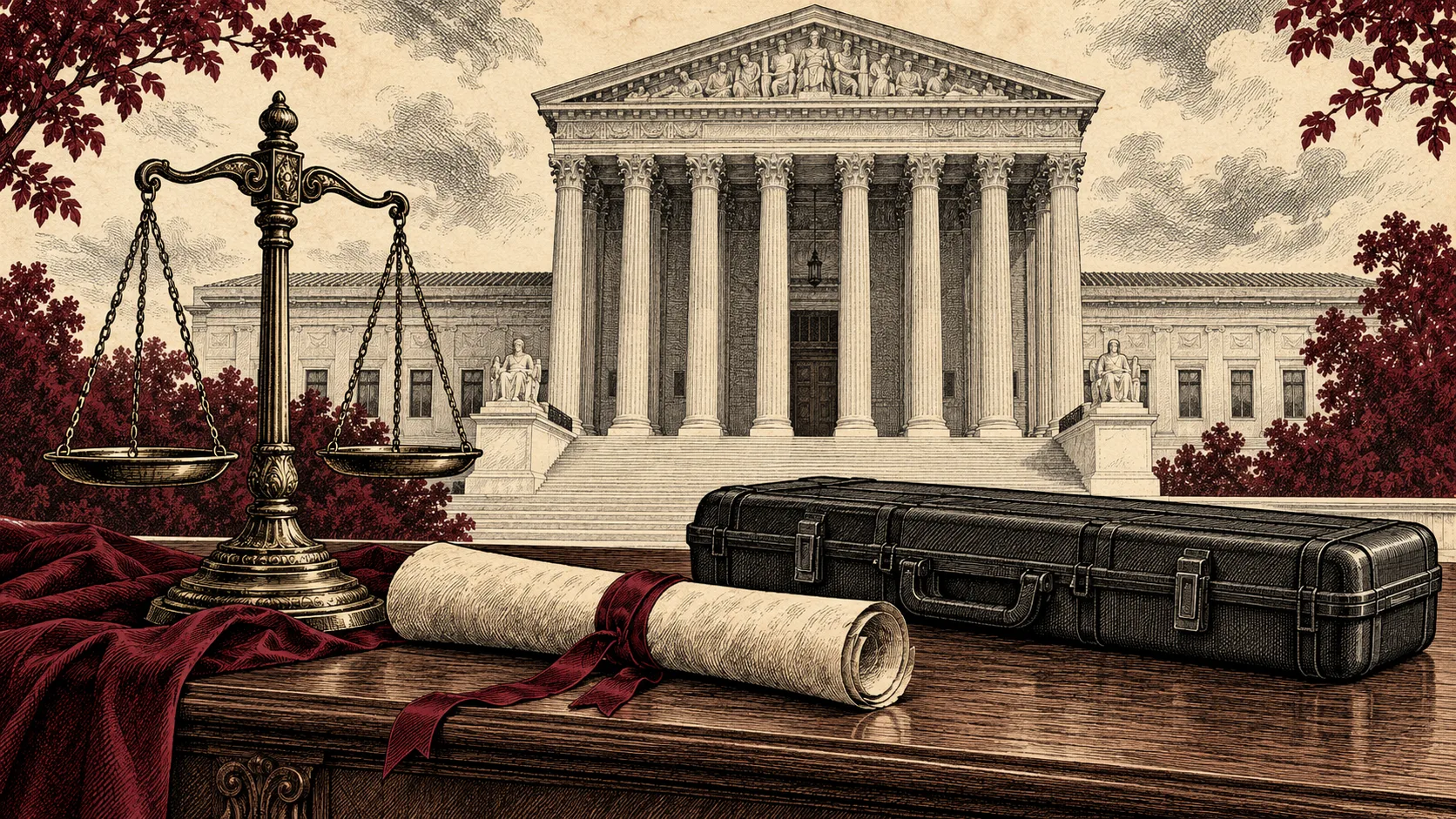
The Supreme Court’s coming rifle-ban case should test the government’s reasoning, not settle for the rhetoric surrounding firearms.
A constitutional right is supposed to place limits on government, including when officials believe a restriction would be popular. That is why the Supreme Court’s coming fight over semiautomatic-rifle bans deserves a better debate than the familiar exchange of slogans.
Roll Call’s October 2 preview identifies Viramontes v. Cook County as a major gun-rights case in the new term, involving restrictions on weapons including AR-15-style rifles. The court has agreed to consider the dispute; it has not issued the new ruling that either side wants.
A Georgetown Law preview likewise describes the case as concerning possession of AR-15s and similar rifles. Its faculty discussion highlighted the tension between arguments about unusual dangerousness and the widespread use of the weapons at issue.
For conservatives, the central question should be whether government can justify the boundary it draws, rather than whether a firearm’s appearance or political reputation makes that boundary easier to sell.
Definitions should do real work
The phrase “assault weapon” cannot substitute for an explanation. Officials defending a restriction should identify what the law covers, why its distinctions matter and how the restriction fits constitutional protections. Opponents should address those arguments rather than imagining that naming the Second Amendment ends every legal question.
There are serious interests on both sides of the dispute. Supporters of bans seek to reduce the harm that firearms can inflict, including in mass shootings. Gun owners object to restrictions that reach people who have committed no violent act and who possess their firearms for lawful purposes.
Taking the first concern seriously does not require dismissing the second. Nor does defending lawful ownership require speaking as though the consequences of criminal misuse are somebody else’s problem.
The conservative position is strongest when it insists that public safety and constitutional limits must be considered together. Government should not be able to turn a broad appeal to safety into an answer to every objection. The point of judicial review is to examine the authority being exercised, not merely the sincerity of the officials exercising it.
A decision is not a campaign promise
It is tempting to read the court’s composition and declare the outcome inevitable. That would mistake political expectations for a judgment that has not been delivered. The reasoning and the scope of any eventual decision will matter as much as which side wins.
People also deserve a clear explanation of what changes and what does not. Agreement to hear a case is not permission to disregard existing law, and a ruling about one restriction should not automatically be described as an answer to every question about firearms.
The country needs that precision because this debate involves both personal liberty and the possibility of devastating harm. Neither benefits from careless claims about what judges have already done.
The justices should require an argument sturdy enough to survive beyond the next news cycle. If government wants to prohibit a category of firearms, a frightening label should not be the most persuasive part of its case.

Daniel Mercer is a conservative political writer specializing in elections, government, foreign policy, and the growing power of America’s political and administrative institutions. His work focuses on how decisions made in Washington affect ordinary Americans far beyond the capital. Mercer is particularly interested in executive power, government bureaucracy, media influence, immigration, national security, and the evolution of the Republican Party. At The Dispatch Room, he approaches politics from a pragmatic conservative perspective, separating political theater from the decisions and institutions that actually shape public policy.
Discussion
Loading discussion…