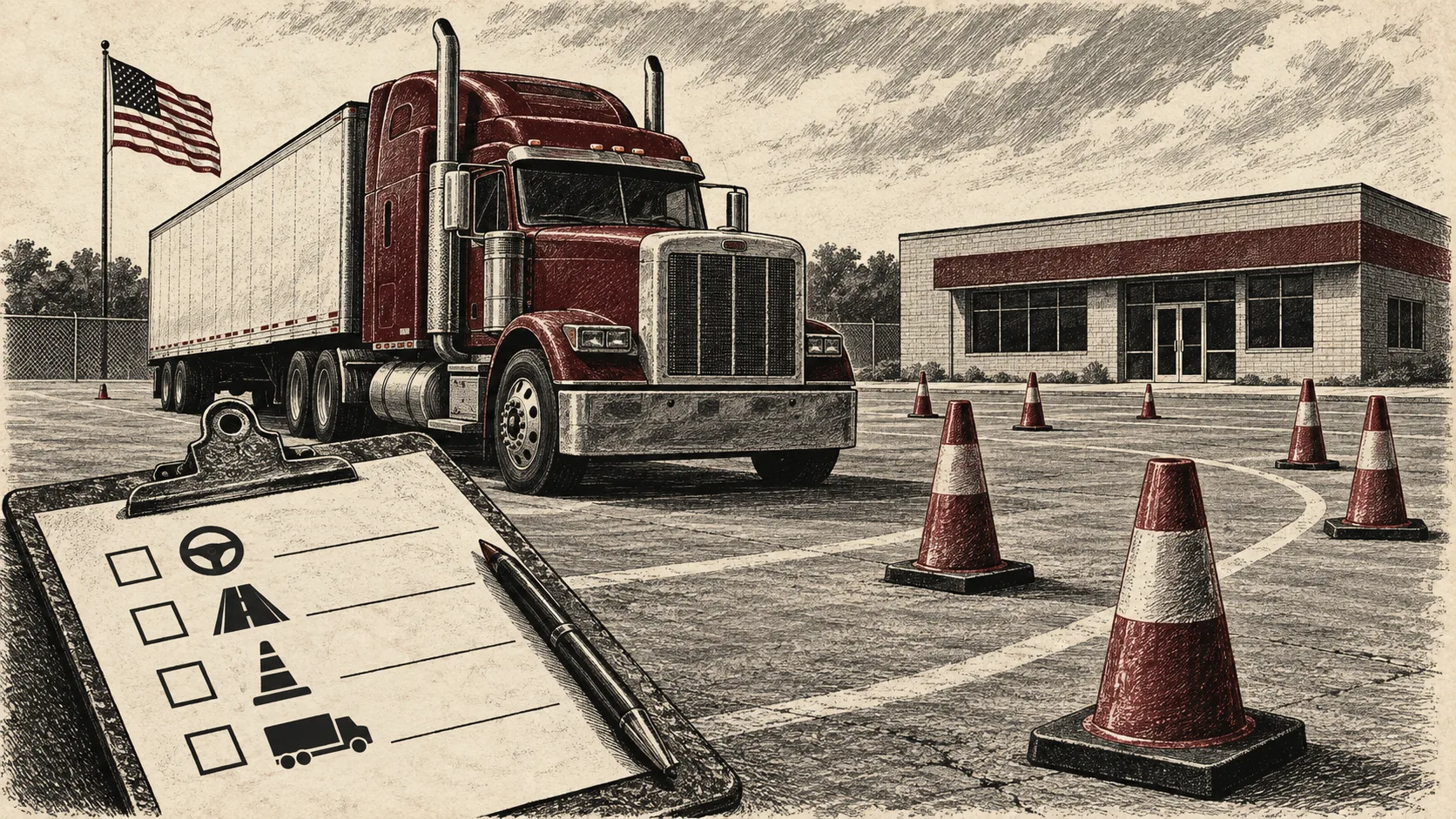
Duffy’s crackdown puts driving schools and license testers under scrutiny. Families sharing the highway deserve standards that mean something.
The family in the next lane cannot inspect a truck driver’s training records. They have to trust that the school taught the necessary skills, the tester checked them, and the licensing authority took its responsibility seriously. Every person who signs off on that process is making a promise to people they will never meet.
Sean Duffy’s trucking-school crackdown is worth supporting because it puts those gatekeepers under scrutiny. A government that demands licenses should be able to explain why the credentials it recognizes deserve public trust.
In its August 31 announcement, the Federal Motor Carrier Safety Administration said it was ordering emergency removal of 110 commercial-driver training providers associated with more than 5,000 drivers cited for English-proficiency violations. A separate investigation produced more than 160 notices of proposed removal. Those are different enforcement stages, and adding the figures together as completed shutdowns misstates the announcement.
The agency reported problems including instructors without the correct licenses, inadequate maneuvering space and missing assessment records. It also announced a nationwide audit of third-party skills testers and the states responsible for overseeing them.
That audit deserves as much attention as the school closures. If a system can produce a certificate without reliably establishing competence, inspecting the driver at the roadside is only catching the problem after the public has been exposed to it.
The Owner-Operator Independent Drivers Association welcomed the enforcement effort, according to FreightWaves. Its president, Todd Spencer, supported stronger training oversight and enforcement of English-language requirements. Professional drivers have an obvious interest in making sure their qualifications cannot be cheaply imitated.
A serious approach to road safety should protect that work. Drivers who invest time and money in learning their trade should not have to compete against businesses that cut required training, falsify paperwork or treat a passing result as something a customer purchases. Where investigators establish those practices, meaningful consequences are justified.
English requirements should be enforced according to the actual standard and assessed consistently. A driver’s accent or birthplace is no substitute for evidence about whether that driver meets the qualifications. The public interest is competent driving and reliable communication, and every applicant should face the same test.
The administration also owes the public precision. A proposed removal is not a completed one, and a regulatory violation does not automatically establish criminal fraud. Publishing the grounds for enforcement, the opportunity to respond and the final outcome would make this campaign more credible and harder to dismiss as political theater.
Students deserve consideration too. Someone who paid for legitimate instruction should have a clear way to find out whether a provider remains authorized and whether completed training will count. Enforcement should make it easier to become a qualified professional, even as it makes selling worthless credentials harder.
Conservatives often argue that government does too many things badly. Verifying the qualifications behind a commercial driving license is precisely the kind of basic responsibility it should perform well. Duffy is right to direct attention to schools and testers; the measure of success will be whether the oversight continues after the cameras leave.
A certificate should represent demonstrated ability. When it does not, everyone sharing the road is being asked to absorb the risk.

Claire Whitmore is a conservative writer covering culture, family, education, media, and the rapidly changing expectations placed on women in modern America. Her work examines the intersection between politics and everyday life, particularly debates surrounding motherhood, relationships, career expectations, schools, and popular culture. Whitmore is skeptical of political movements that treat traditional choices as inherently outdated and argues that genuine freedom requires allowing women to define success for themselves. At The Dispatch Room, she brings a measured but unapologetically conservative perspective to some of the country’s most contentious cultural debates.
Discussion
Loading discussion…