Falmouth restored its elementary-school parades after objections. The lesson is to consult families before discarding traditions—and accommodate children without erasing the celebration.
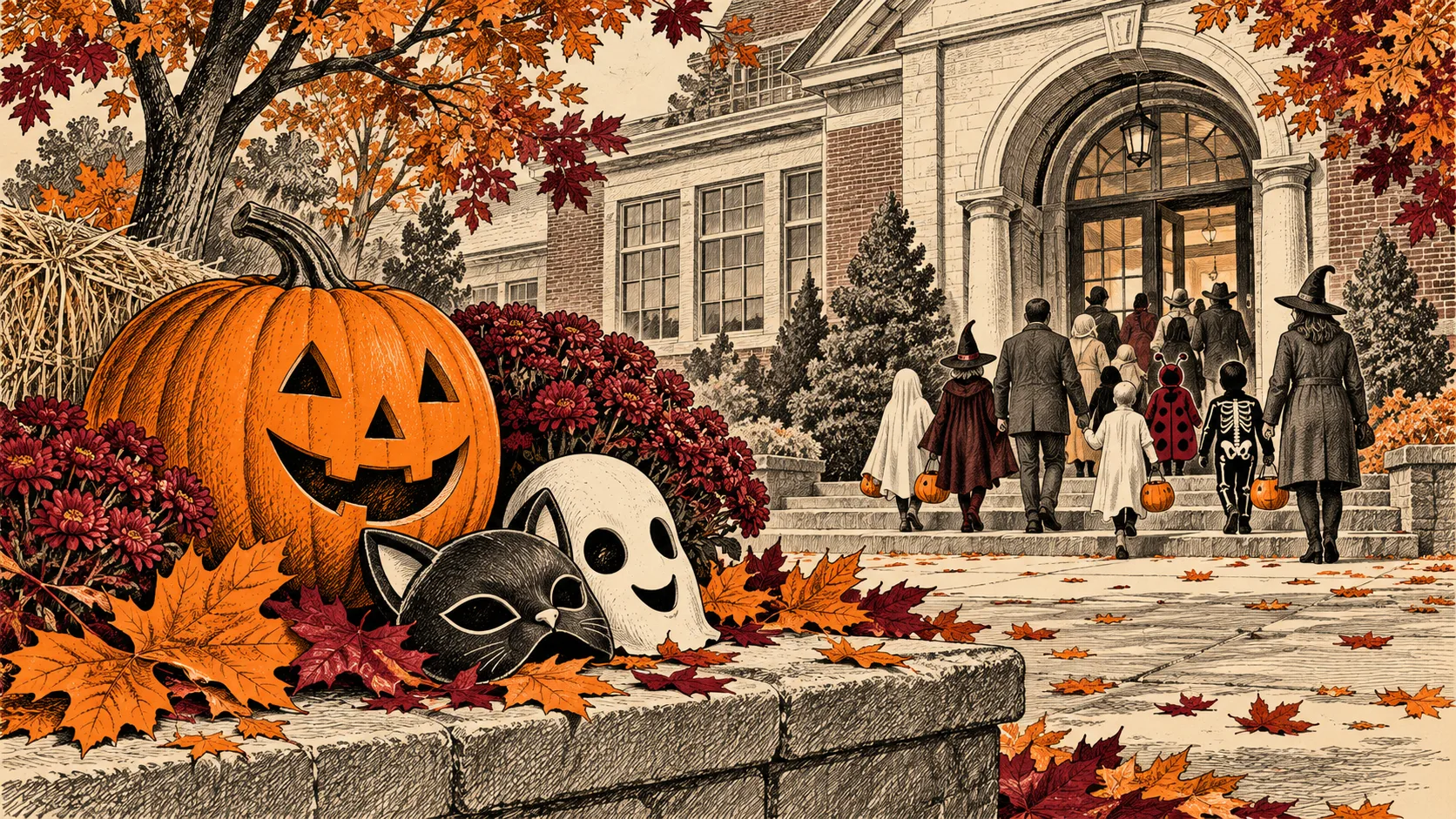
A school Halloween parade is a small thing until someone decides that families no longer need it. Then the costumes and photographs become part of a much larger argument about who gets to decide what a community keeps.
Falmouth, Massachusetts, offers a timely example as Halloween approaches. Boston.com reported on October 16 that the district had reversed its planned elementary-school parade cancellation by September 30 following parental opposition. At an October 13 meeting, Superintendent Lori Duerr acknowledged insufficient community discussion before the original decision. This was a reversal earlier this fall, not a new cancellation this week.
The district’s explanation deserves a fair hearing. Duerr cited inclusion, behavioral and emotional difficulties, and elevated absences around Halloween. She also distinguished ending school parades from canceling Halloween throughout the community. Those concerns should be addressed on their merits rather than reduced to a cartoon about officials hating fun.
But listening to that explanation does not require accepting cancellation as the best answer.
Schools are more than delivery systems for assignments. They are places where children and parents build a shared history through concerts, field days, celebrations and familiar rituals. A tradition does not have to appear on a test to contribute something worthwhile to school life.
Conservatives are right to resist the assumption that an established practice must justify its continued existence while removing it counts as neutral administration. A decision to discontinue a tradition changes the community too. The people who value it deserve to be heard before the announcement arrives.
At the same time, preserving a parade should never mean pressuring every child to participate. Families may have religious objections, a child may find costumes overwhelming, and buying an elaborate outfit should not become an unofficial admission fee. Practical accommodations could include a welcoming alternative activity, inexpensive costume options and adjustments for sensory needs.
Those are proposals, not claims about arrangements already adopted in Falmouth. Their value is that they treat inclusion as a problem to solve with families instead of a reason to end the conversation.
Attendance concerns also call for careful inquiry. Officials should ask why families stay home and whether a different format would help. A number can identify a concern without telling administrators which remedy parents actually want.
The district deserves credit for reversing course rather than treating objections as an inconvenience to be managed. Admitting that consultation fell short is a useful beginning. The next step should be an open discussion in which keeping the tradition is a genuine option.
A healthy school community can make room for children who celebrate and children who do not. That takes more care than issuing a cancellation notice, but it is also a better description of what inclusion ought to mean.

Claire Whitmore is a conservative writer covering culture, family, education, media, and the rapidly changing expectations placed on women in modern America. Her work examines the intersection between politics and everyday life, particularly debates surrounding motherhood, relationships, career expectations, schools, and popular culture. Whitmore is skeptical of political movements that treat traditional choices as inherently outdated and argues that genuine freedom requires allowing women to define success for themselves. At The Dispatch Room, she brings a measured but unapologetically conservative perspective to some of the country’s most contentious cultural debates.
Discussion
Loading discussion…