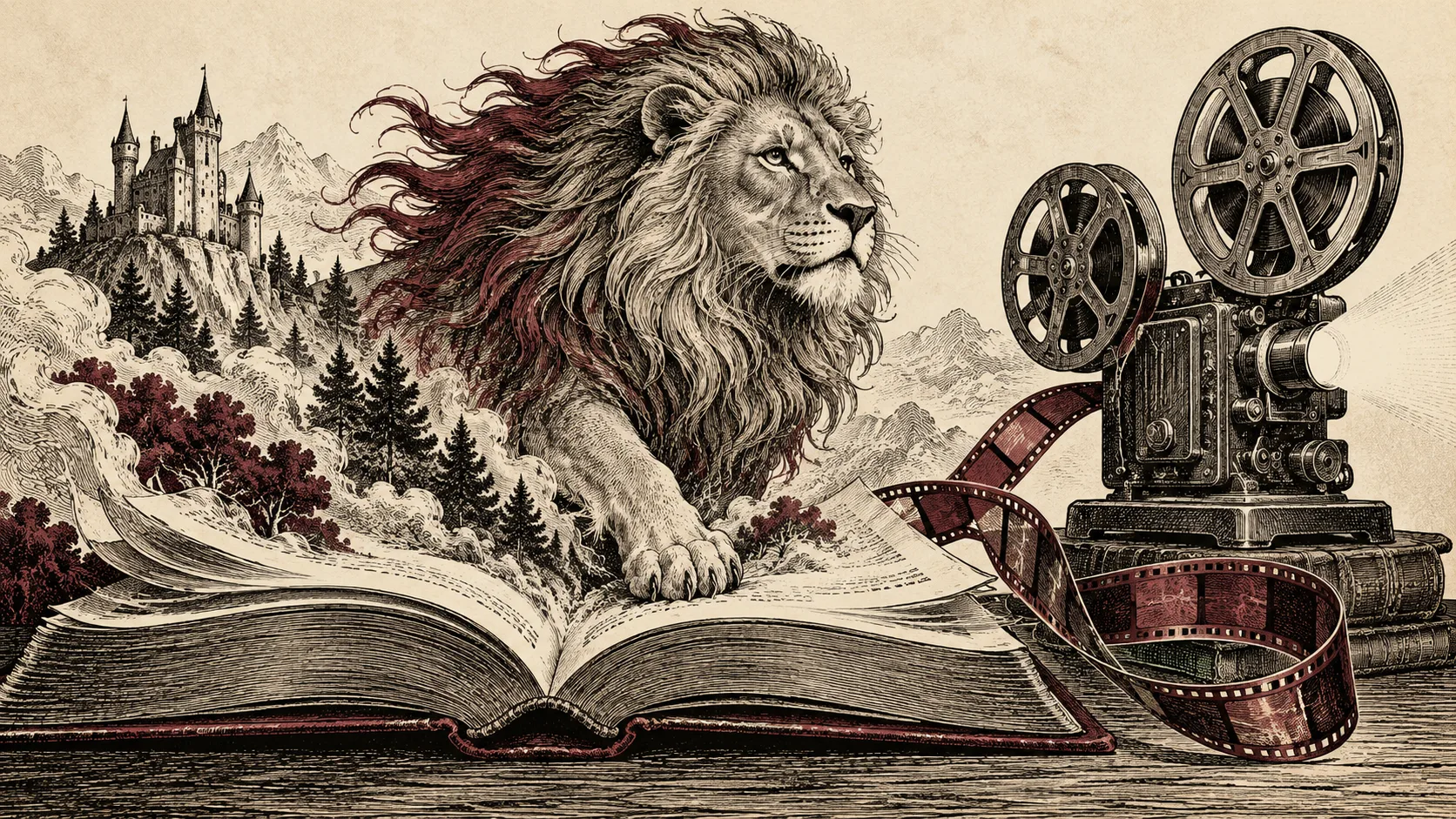
The Aslan casting debate raises a fair question about fidelity to C. S. Lewis—but a casting announcement is not a review of the finished film.
When a studio buys the right to adapt a beloved book, it acquires more than recognizable names and a ready-made audience. It takes on a story people value for reasons that may not fit the studio’s preferred interpretation. That should inspire some humility.
The latest debate over Greta Gerwig’s Narnia adaptation raises exactly that question. Associated Press reporting on October 4 describes conservative Christian objections to Meryl Streep voicing Aslan. The lion carries a Christian significance that makes this more than an ordinary argument about casting.
But the distinction matters: a woman providing a character’s voice does not, by itself, establish that the character has been made female or that the film has rejected Lewis’s religious vision. Treating either claim as settled would get ahead of the evidence.
Netflix’s own preview lists Streep in the cast and gives the film a February 12, 2027 theatrical release, followed by Netflix on April 2. It also includes a supportive statement from the C. S. Lewis Company about Gerwig’s approach. Readers should consider that alongside the criticism, not pretend it does not exist.
Respect is not the enemy of imagination
The strongest conservative argument here is about stewardship. An adaptation can find new ways to tell a story without treating its inherited meaning as an embarrassment to be corrected.
Christian readers are entitled to care about what happens to a work whose religious imagination matters to them. They should not have to apologize for wanting more than familiar scenery wrapped around a different moral universe. A studio cannot reasonably court the attachment people feel toward a book and then dismiss that attachment whenever it becomes inconvenient.
At the same time, fidelity is not a demand that every sentence reach the screen unchanged. Film has different rhythms, and a performance can succeed in ways that are difficult to judge from an announcement. The question is whether the finished work understands what gives the original its force.
That is where criticism should concentrate: the story’s treatment of goodness, temptation, sacrifice and authority, and the place Aslan occupies within it. Those choices will tell us more than arguments built entirely around a performer’s identity.
Let the film answer the important question
If Gerwig delivers an adaptation that honors Lewis while making an accomplished film, conservative viewers should be willing to recognize it. If the result borrows his world while hollowing out what it means, they should explain precisely how it fails.
Neither judgment requires assuming an artist’s motives before seeing the work. Preemptive outrage can make a serious concern look like an inability to distinguish a possibility from a fact. That does no favors to readers who genuinely want the books treated with respect.
The useful demand is simple enough: approach Narnia as something worth understanding, not merely something profitable to reuse. Hollywood is free to make new stories with new convictions. When it chooses Lewis’s name and world, audiences are equally free to ask whether it has preserved the heart of what it borrowed.

Marcus Bennett is a conservative commentator focused on crime, education, economic opportunity, urban policy, and American culture. Raised in a working-class community outside Atlanta, Bennett developed his politics around the belief that public policy should be judged by results rather than intentions. His columns frequently examine failing institutions, public safety, family stability, educational reform, and the political assumptions surrounding Black Americans. Bennett brings a skeptical, data-driven approach to political arguments and has little patience for ideological explanations that fail to match conditions on the ground.
Discussion
Loading discussion…