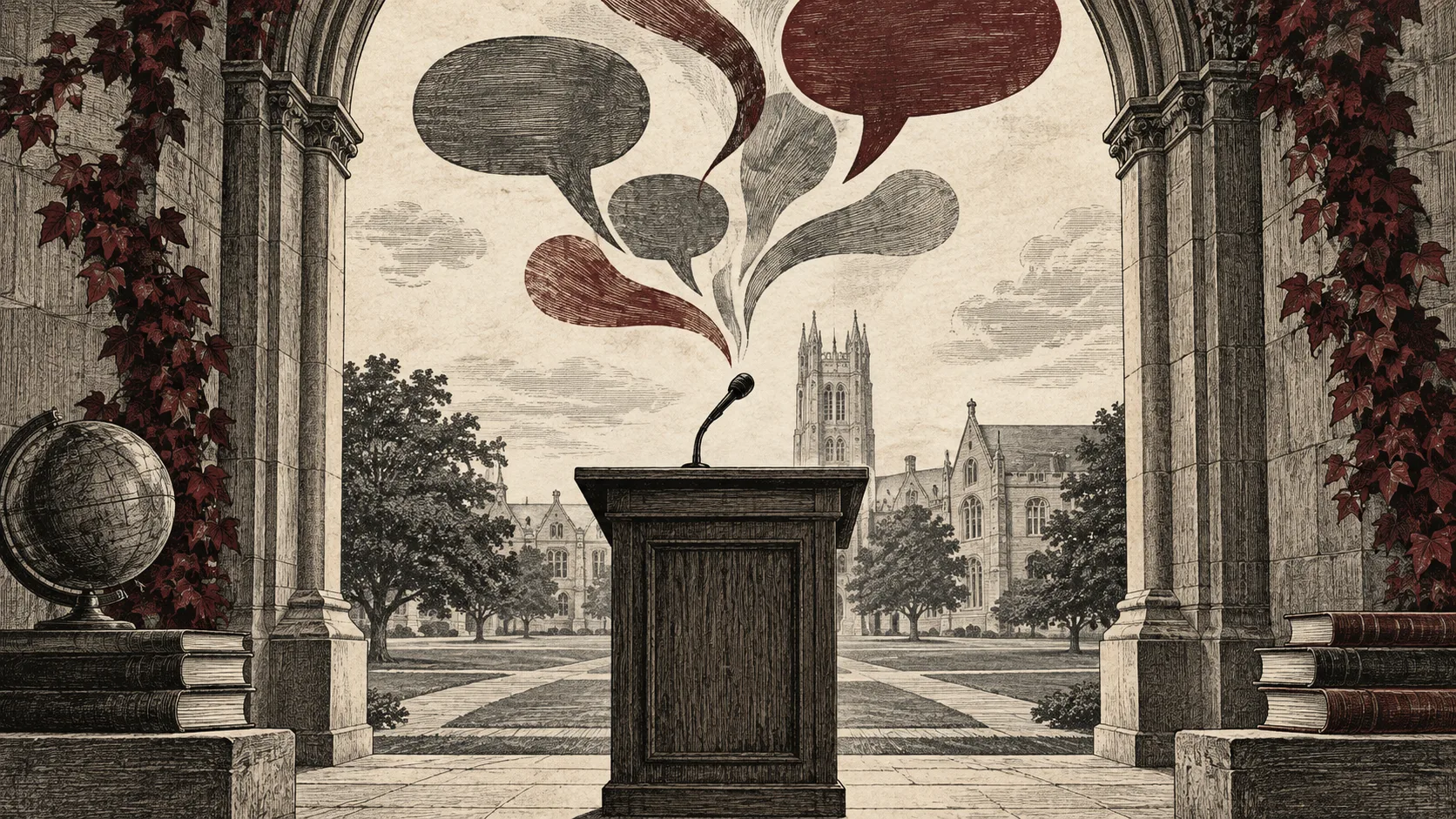
New campus rankings show improvement, but too many universities still fall short of their promise to encourage independent thought.
Universities sell the promise of intellectual independence. Students are supposed to encounter difficult arguments, defend their own positions and discover that disagreement is not a personal emergency. A campus that teaches them to calculate the social cost of every opinion is offering something considerably less valuable.
The Foundation for Individual Rights and Expression’s 2027 College Free Speech Rankings provide an uncomfortable measure of that gap. The report, released September 9, ranks 261 institutions and draws on a survey of nearly 63,000 undergraduates. Its average score reached 61.36, the highest in the rankings’ seven-year history, but still only a D-minus on FIRE’s grading scale. It awarded 121 schools an F.
Those grades are FIRE’s assessment, not an official accreditation judgment. The rankings combine student experiences with institutional policies and speech controversies; they should be read as evidence about a campus climate, not a claim that every classroom at a low-ranked school is hostile.
Still, improving to a D-minus is a peculiar achievement for institutions that make such expansive claims about cultivating independent thought.
Improvement deserves credit—and perspective
The report contains encouraging news. FIRE says student acceptance of shouting down speakers, blocking access to events and using violence to stop speeches declined somewhat from the previous year’s highs. That progress deserves acknowledgment rather than being buried because a wholly negative story would be easier to sell.
But the distinction between arguing with a speaker and preventing anyone from hearing one should not be an advanced educational concept. A university can host protests, sharp questions and forceful criticism without letting disruption determine which ideas survive.
For conservative students, that principle protects the right to challenge fashionable assumptions. For everyone else, it protects precisely the same freedom. A speech policy that changes with the popularity of the speaker is a permission slip issued by whichever faction currently has leverage.
Conservatives should want a rule that survives a change in power
The answer cannot be to replace one political loyalty test with another. Government officials who pressure universities to punish lawful opinions are not repairing a culture of censorship merely because they dislike the people being censored.
A durable conservative position should be more confident than that. Require institutions to protect lawful expression, apply their rules consistently and distinguish genuine threats from arguments people find offensive. Challenge bad ideas in public instead of making administrative punishment the first response.
Parents comparing colleges should ask practical questions alongside the glossy admissions pitch. What happens when a controversial speaker is invited? Can students question prevailing views without fearing institutional retaliation? Do administrators explain and enforce the same standards when their own supporters are angry?
No ranking can answer every question about a university, but these are questions worth asking before committing years of a student’s life and a substantial amount of family money.
Higher education should be capable of more than managing reputational anxiety. If universities want to be trusted as places where ideas are tested, they need to let ideas face an argument. A better score is welcome; a D-minus should still prompt uncomfortable questions.
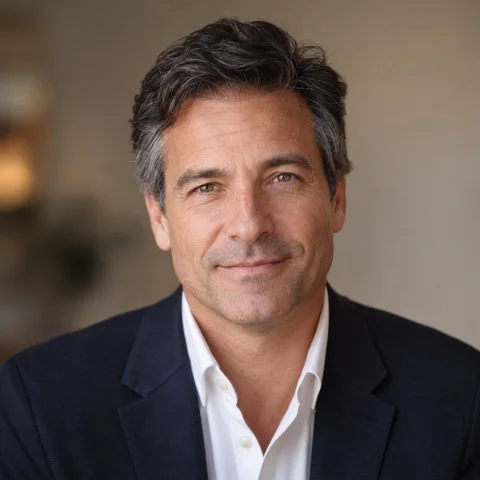
Marcus Bennett is a conservative commentator focused on crime, education, economic opportunity, urban policy, and American culture. Raised in a working-class community outside Atlanta, Bennett developed his politics around the belief that public policy should be judged by results rather than intentions. His columns frequently examine failing institutions, public safety, family stability, educational reform, and the political assumptions surrounding Black Americans. Bennett brings a skeptical, data-driven approach to political arguments and has little patience for ideological explanations that fail to match conditions on the ground.
Discussion
Loading discussion…