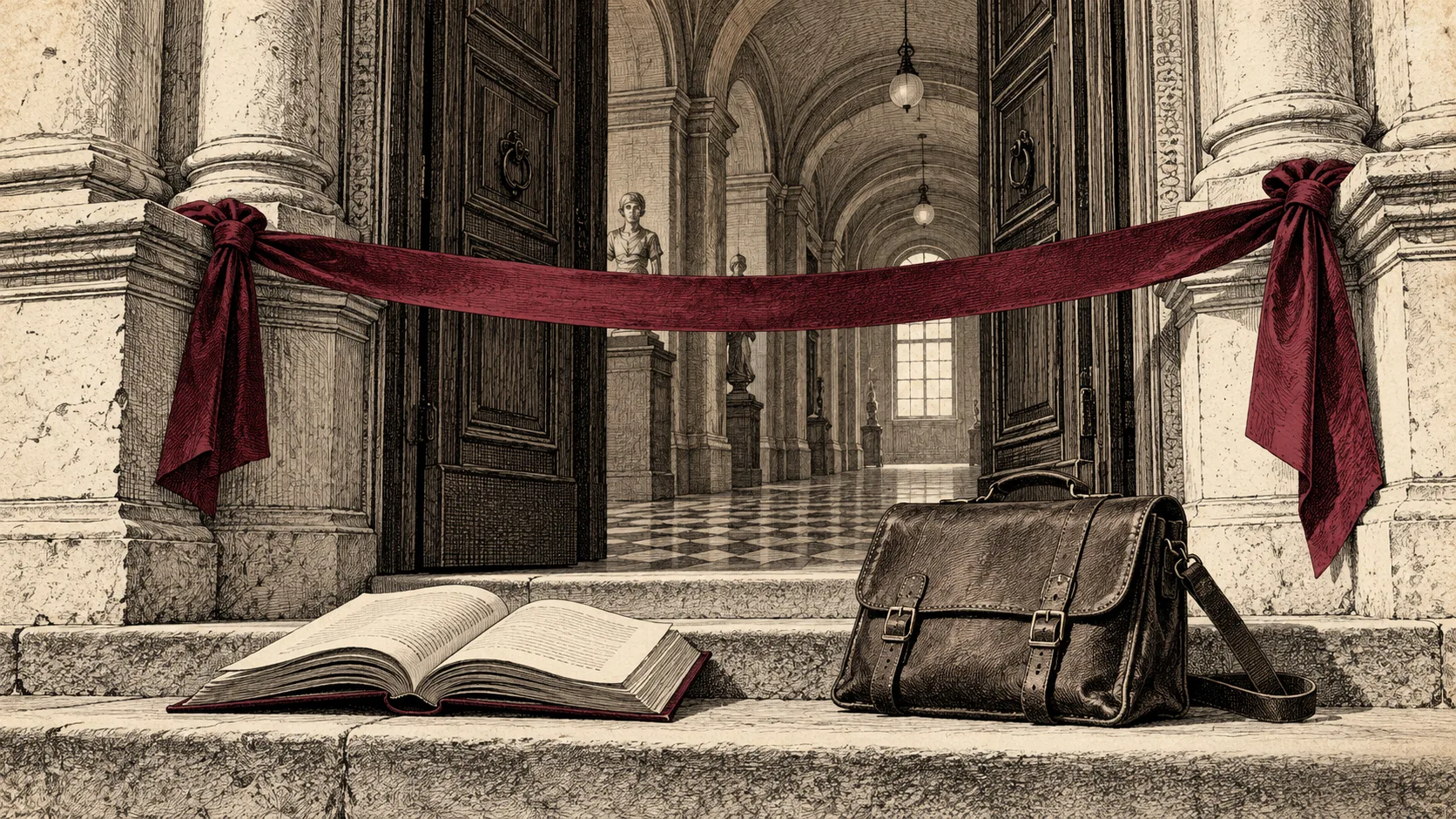
The canceled Reggio Emilia trip raises a basic question: should professional learning depend on a declaration about Israel?
An educator going abroad to study early childhood teaching should need professional curiosity, not an approved position on a foreign government. When an educational exchange becomes a test of political belonging, the institution has lost sight of its purpose.
That is the troubling question raised by the canceled American Jewish educators’ study trip to Reggio Emilia, Italy. It deserves scrutiny without turning a complicated dispute into a claim that every account is settled.
Italy’s public broadcaster RAI reported on October 12 that 70 American Jewish educators had withdrawn, saying they had been asked to distance themselves from Israel’s government. RAI also reported recorded remarks by Reggio Children president Maddalena Tedeschi about seeking declarations distancing participants from war and genocide, with attendance linked to signing.
The city disputes the implication of exclusion. Mayor Marco Massari said Reggio Emilia excludes nobody, rejected accusations of antisemitism and promised to clarify misunderstandings. RAI reported that he met a separate group of 22 teachers arriving from Israel. Those facts matter: this was not a blanket exclusion of every Israeli educator.
Prizmah, the Jewish day-school organization, described the canceled trip in an October 15 statement as involving The Paradigm Project. Its account cited scrutiny of educators’ social media, concerns about safety and a demand to sign a statement. That is the organization’s account, not an independent finding about every participant’s experience.
Even with those qualifications, the principle should be straightforward. Jewish teachers do not become representatives of Israel’s government by entering an Italian classroom. Nor should a professional invitation become conditional on their willingness to make a political declaration.
Institutions may set rules against harassment, threats and disruption. They can insist that every visitor treat colleagues with dignity. A requirement governing conduct is different from a demand governing conscience, and educational leaders should know the difference.
Criticism of Israel is legitimate. Opposition to civilian suffering is legitimate. Neither requires treating ordinary Jewish professionals as people who must first establish their political innocence. The same protection should apply to Muslim, Christian and secular educators confronted with demands to answer for governments or movements they do not represent.
Conservatives have good reason to resist this kind of institutional gatekeeping. Professional development should be an opportunity to learn, not another checkpoint where activists decide who belongs. A school that prizes inquiry should be able to host people who disagree about international politics.
The useful response is specific: publish the attendance requirements, explain whether they apply equally to all groups, address the organizers’ safety concerns and offer a route back to an exchange without political declarations. Neither a slogan about inclusion nor a sweeping accusation substitutes for those answers.
Reggio Emilia’s educational reputation should make that standard easier to meet, not easier to evade. Teachers came looking for ideas they could bring home to children. They should not have to surrender their own judgment to get through the door.

Claire Whitmore is a conservative writer covering culture, family, education, media, and the rapidly changing expectations placed on women in modern America. Her work examines the intersection between politics and everyday life, particularly debates surrounding motherhood, relationships, career expectations, schools, and popular culture. Whitmore is skeptical of political movements that treat traditional choices as inherently outdated and argues that genuine freedom requires allowing women to define success for themselves. At The Dispatch Room, she brings a measured but unapologetically conservative perspective to some of the country’s most contentious cultural debates.
Discussion
Loading discussion…